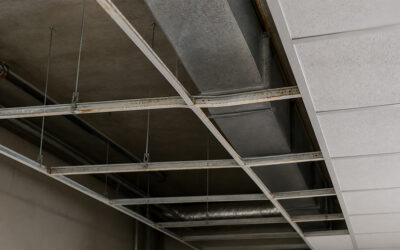
Drop ceilings are a widely adopted solution across various environments, from bustling office buildings and educational institutions to healthcare facilities, retail spaces, and even residential basements. Their popularity stems from their ability to conceal essential mechanical systems, enhance acoustic comfort, and provide convenient access for maintenance, while offering a clean, finished aesthetic without the extensive labor and cost associated with traditional plaster ceilings. The right selection of high-quality ceiling tiles and a professionally installed suspension system makes drop ceilings a highly versatile and practical choice for nearly any interior.
Humidity: The Less Obvious Culprit
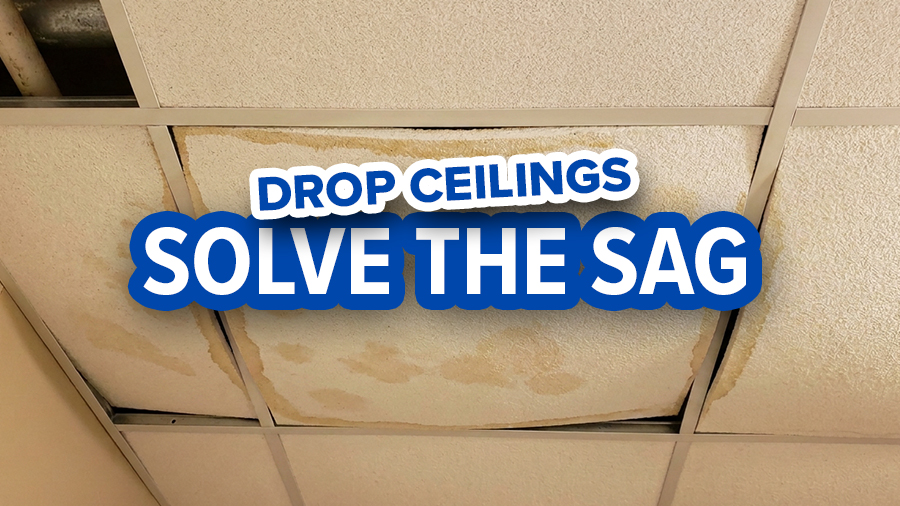
While obvious leaks cause immediate, visible damage to drop ceiling or any ceiling for that matter, the less apparent source of drop ceiling sagging or in some cases even falling is humidity. Over time, elevated or fluctuating relative humidity (RH) can cause tiles to absorb moisture, soften, and deform. This is especially true for standard or lower-grade materials, which are more susceptible to moisture damage. This process shows up in a few ways:
Absorption & Swelling
Porous tiles (mineral fiber, untreated gypsum) take on moisture, soften, and lose their edge definition.
Sagging or Bowing
Softened tiles can bow in the grid and sit unevenly; with prolonged exposure they may increasingly pull away or dislodge.
Surface Staining & Mineral Streaks
Condensation on cooler surfaces can leave yellow/brown discoloration or mineral deposits even when there’s no obvious leak.
Mold & Mildew
Persistent dampness supports microbial growth that stains tiles and causes odors.
Grid Corrosion
Humid conditions in the plenum can speed rust on metal components, compromising alignment and support.
Ceiling Stains: Is it Humidity or a Leak?
Stains don’t always mean a current leak. Humidity-related staining tends to have distinct signs:
| Sign | Humidity | Leak |
|---|---|---|
| Discoloration | Slow, progressive yellowing or browning over time — no clear wet spot | Sudden dark stain, often with a defined wet ring or drip pattern |
| Stain Pattern | Concentrated near poor airflow areas, HVAC diffusers, or uninsulated ducts | Localized directly below a pipe, fixture, or roof penetration |
| Odor | Persistent musty odor or visible mold from ongoing dampness | Little to no odor unless leak has been present long enough to grow mold |
| Mineral Streaks | White or grey streaks from condensation carrying and depositing particulates | Rarely present unless the leak has been slow and recurring over time |
| Onset | Gradual — develops over weeks or months | Often sudden, following rain, a plumbing event, or HVAC failure |
These point to a moisture-management issue in the room or plenum rather than just a one-off plumbing or roof leak.
Prevention and Practical Steps
Humidity Control
Keep RH in the 30–50% range where practical; avoid prolonged levels above ~60%.
Material Selection
Use moisture- or mold-resistant tiles (treated mineral fiber, fiberglass, vinyl-faced, or water-resistant gypsum) and rust-resistant grid in humid areas. Choosing the right tile for the specific environment is key to long-term performance.
Insulate Cold Surfaces
Ducts and pipes in the plenum should be insulated to reduce condensation.
Improve Airflow
Proper HVAC design and balanced ventilation reduce stagnant, humid pockets above the ceiling.
Inspect Regularly
Periodic checks catch early softening, staining, or rust before they worsen.
If You Find Damage
Rule Out Active Leaks
Check plumbing, roof, and HVAC as potential sources before assuming humidity is the cause.
Dry and Ventilate
Thoroughly dry and ventilate the affected area and plenum before making any repairs.
Replace Damaged Tiles
Swap swollen or moldy tiles with suitable moisture-resistant options appropriate for the environment.
Repair the Grid & Fix the Source
Repair or replace corroded grid components and address the underlying humidity source to prevent recurrence.
Drop ceilings work well when the environment, materials, and installation are matched to the space. If you’re seeing sagging, staining, or ongoing humidity concerns, a targeted inspection will identify whether the root cause is humidity, a leak, or material selection—and what practical steps will stop the problem from returning. At ERCO Ceilings and Interiors we offer a range of high-grade ceiling tiles, including options with superior sag resistance for high-humidity environments, no-sag performance guarantees, and solutions rated for areas up to 100% humidity and standing water. Contact us for an inspection and a tailored recommendation. We’ll help you select the ideal solution for your space, ensuring durability and performance without over-specifying.